Real Estate Impacted by Covid-19: Projected Decline of 30%
The Covid-19 situation seems far from over and may extend into the third quarter of 2020. The overall real estate market in Bangkok and its vicinity for the entire year of 2020 is projected to see a 50% decrease in new project launches, equating to 50,000 units (compared to 93,000 units launched in 2019). Additionally, the transfer of ownership or completed residential units is expected to decline by 30%, amounting to 78,000 units.
The contraction in 2020 is likely to be comparable to the flooding event in 2011, and it is anticipated that it will not fall below the downturn experienced in 2005 during the ousting of former Prime Minister Thaksin Shinawatra. During both periods, the public expressed concerns over income instability, uncertain about how the economy would fare and when it would recover.
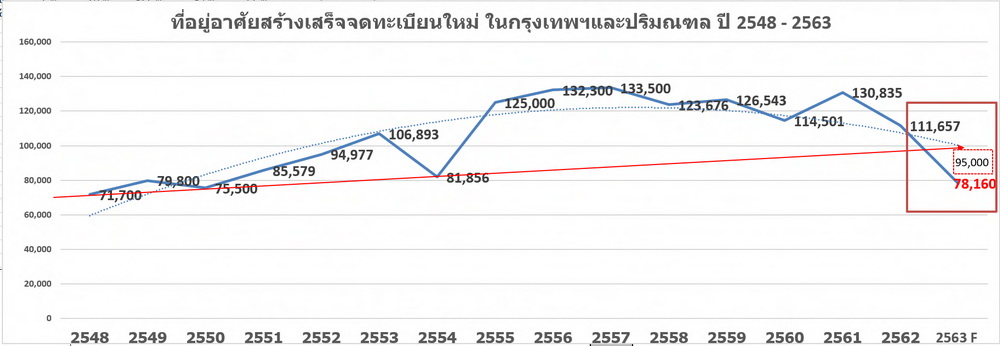
Statistical data from the Thai Real Estate Information Center (REIC)
According to data collected by TerraByte, the total inventory as of February 2020 is 58,000 units, categorized as follows:
- Low-rise projects: 28,000 units, with the highest inventory being townhouses priced at 1-2 million baht, single houses priced at 3-5 million, and twin houses priced at 3-5 million.
- Condominium projects: 30,000 units (with the highest price range being 40,000 – 80,000 baht per square meter).
Among the total inventory, the most concerning products are condominiums priced at 1-3 million baht, as they have the highest number of units available. This is because the target buyers are operational-level salaried employees who face significant income instability.
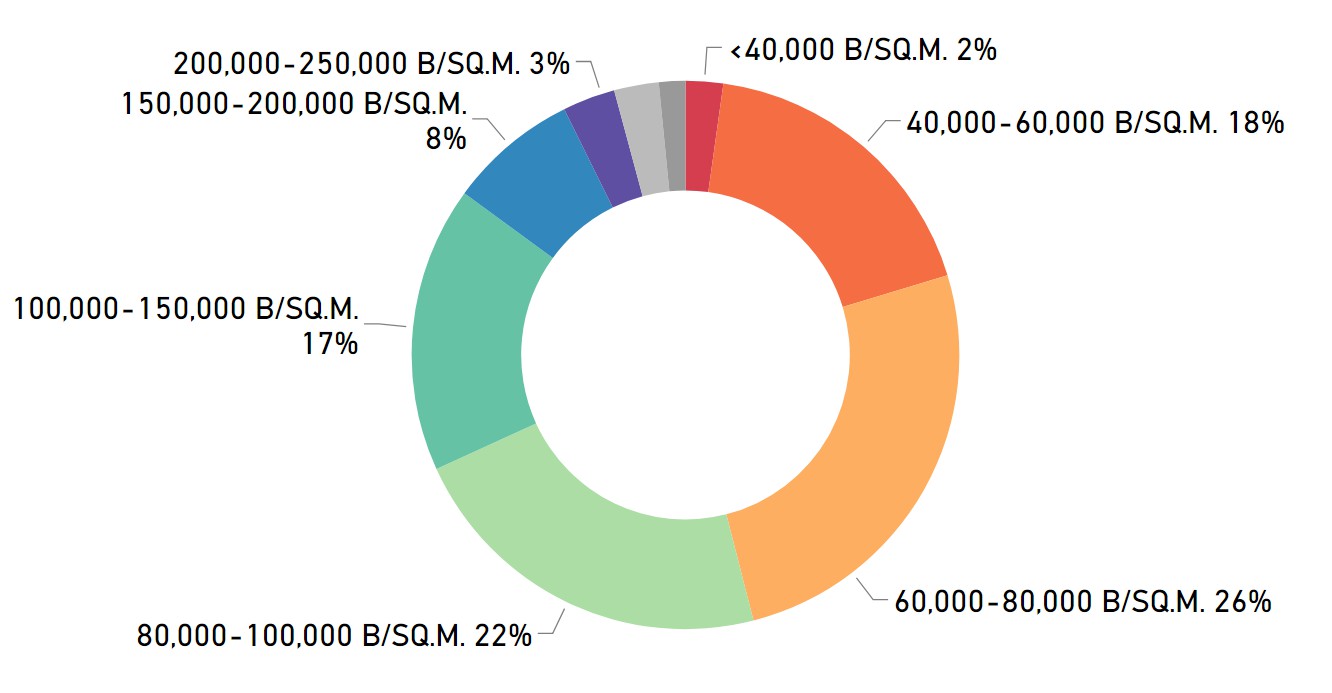
Condominium inventory as of February 2020
Statistical data from TERRABYTE: REAL ESTATE ANALYSIS APPLICATION
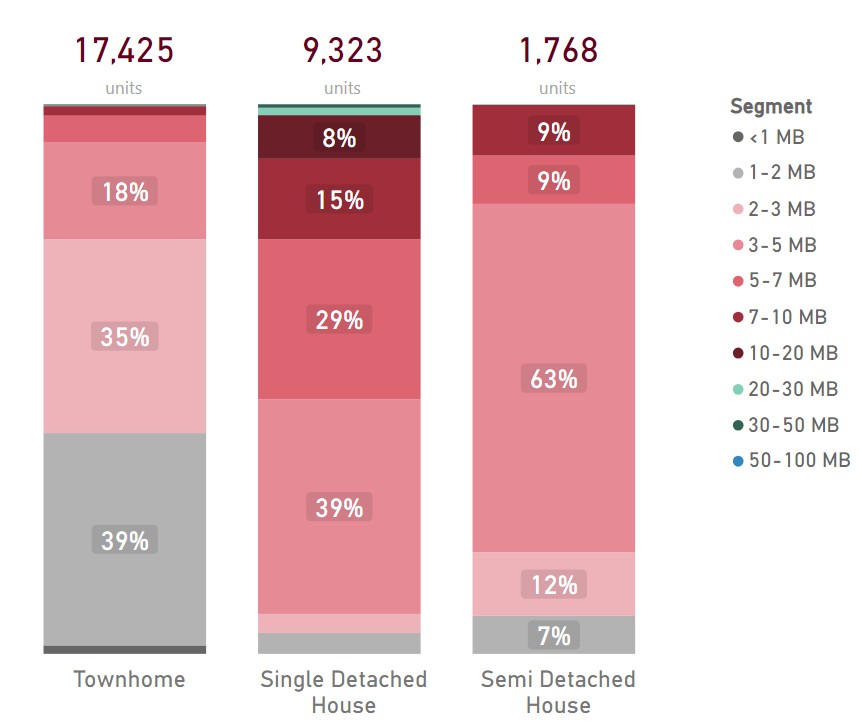
Low-rise project inventory as of February 2020
Statistical data from TERRABYTE: REAL ESTATE ANALYSIS APPLICATION
Considering the total inventory of 58,000 units and the estimated new sales units for 2020 at 50,000 units, the combined total of approximately 110,000 units could reach a balance of Natural Demand, which is 1% of the population (with the population of Bangkok and its vicinity totaling 12 million). If the estimated units available for sale do not increase from this point, existing projects should sell out within this year. However, every company must adapt to assist customers in purchasing products during the COVID-19 situation.
From interviews with operators, the following adjustments have been observed:
- Cash flow management, with listed companies accelerating bond issuance.
- Debt restructuring, including requests for lower interest rates and extended repayment periods.
- Phased development to reduce the number of units.
- Price reductions to clear completed units.
- Shifting business strategies to digital platforms for online sales.
- Reducing staff, including a freeze on new hires.
- Adjusting sales plans to ease payment terms and down payments to assist customers during this 3-6 month period.
Lastly, signs of layoffs of senior employees have already begun to emerge in several companies.